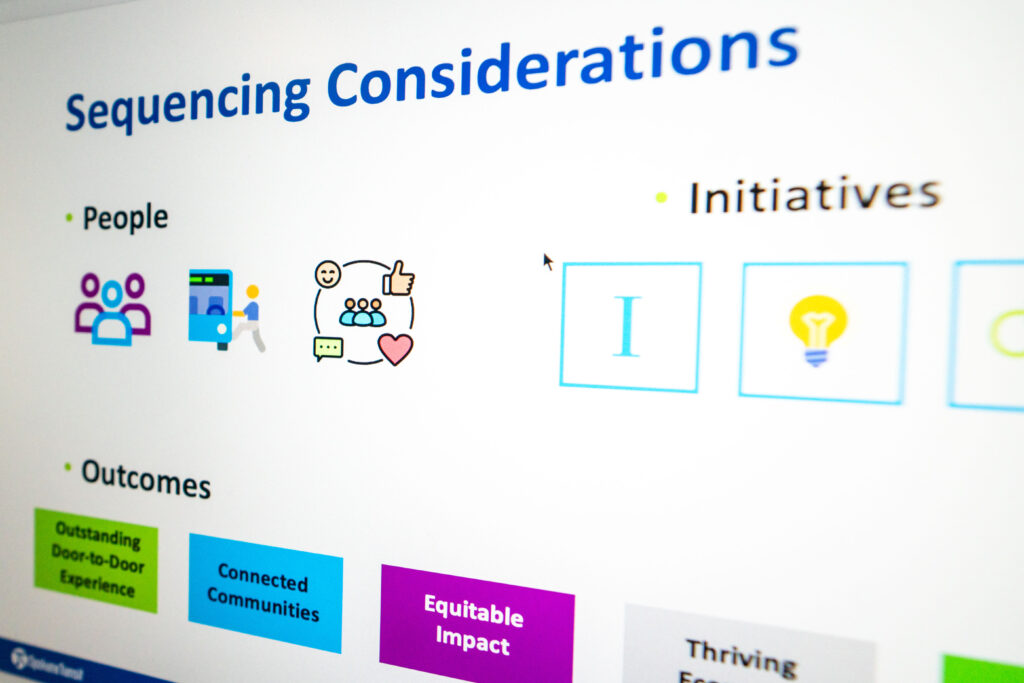
Why Sequence Initiatives?
STA’s 10-year strategic plan Connect 2035 lays out a vision for transit improvements, but implementing its many initiatives requires careful sequencing to ensure accountability, sustainability, and impact.
“Sequencing sets clear expectations for the public and ensures we have a responsible, transparent pathway for how we’re using taxpayer dollars,” said Mike Tresidder, STA Senior Transit Planner. “It also helps our Board of Directors communicate the bigger picture to the community.”
STA’s approach to sequencing balances financial planning, staffing capacity, and project type and readiness. Some initiatives, like expanded shelter and lighting programs, will run throughout Connect 2035, while others—such as the Division Bus Rapid Transit (BRT) project—have targeted deadlines. Some programs will build on existing initiatives or practices, such as Transit-Oriented Development, while others will be new. Pilot programs, like Mobility-On-Demand and low-income reduced fare options, are designed to run for three years for each pilot and will be staggered to allow STA to evaluate and adjust them based on results.
The sequencing has categorized initiatives into three time periods or “eras”: immediate priorities that focus on completing STA Moving Forward projects and early Connect 2035 initiatives, followed by capacity-building efforts such as the STA Facility Master Plan and Division Street BRT. The final era will focus on completing delivery and opportunities for future growth.
Public feedback has played a key role in sequencing. “We heard from the community that some equity-driven initiatives, like the low-income fare pilot, are of high interest for early implementation,” Tresidder noted. Similarly, safety ambassadors and expanded shelter programs were identified as priorities for early outcomes, prompting STA to formalize a process for shelter placement based on ridership data.
“The shelters are a very visible and impactful aspect of rider safety and comfort,” added Tresidder.
Sequencing also ensures STA can manage workload across the agency’s departments. “Certain things have to happen before others—whether it’s procurement schedules, staffing, or operational capacity,” Tresidder said. “By sequencing projects thoughtfully, we can keep our commitments to the public and make the biggest impact for riders without overwhelming the agency. There’s no point in promising deliverables if we don’t even have the capacity to do so.”
A draft resolution to formalize the Connect 2035 project sequencing will be presented to the Planning & Development Committee on Wednesday, April 2, 2025, before being recommended to the Board for adoption.
Upon request, alternative formats of this newsletter can be produced for those who need it. Call (509) 325-6094 (TTY Relay 711) or email [email protected]
