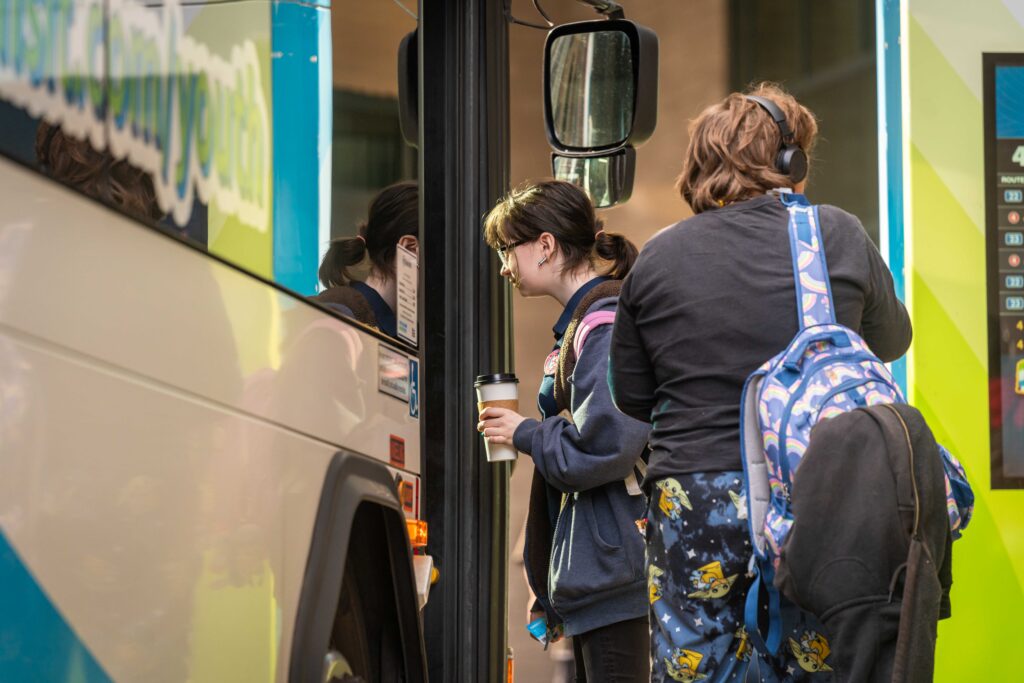
Volunteers of America Saves With Youth Ride Free
Volunteers of America (VOA) saved over $20,000 in 2024 thanks to STA’s Youth Ride Free program. The zero-fare initiative for youth has significantly eased transportation challenges for those who rely on alternative mobility options and for community-focused organizations like VOA.
“These savings are crucial,” said Fawn Schott, President and CEO of VOA Eastern Washington and Northern Idaho. “With the money saved, we can better support the young people we serve and provide more services.”
One of VOA’s critical services, the Crosswalk Youth Shelter, is moving to a new location near Spokane Community College and is scheduled to open in the fall of 2025. The facility will provide youth with closer access to Chief Garry Park, educational opportunities, medical, dental, and health services through a CHAS clinic sharing the same lot, and high-frequency and free transit service with City Line stations just a block away.
Beyond Youth Ride Free, VOA also benefits from STA’s Community Access Pass (CAP) Program, which allows qualified nonprofits to purchase 1-Ride and Day Passes at 50% off regular fares.
“The biggest benefit of CAP is that nonprofit dollars can go twice as far in providing transit to clients,” said Dainon Setzer, STA’s Business Development Manager. “If an individual donates enough money for 50 passes, that nonprofit can actually buy 100 passes through CAP. It’s a way to double the impact of every dollar.”
Unlike other Reduced Fare programs that require individual applications, CAP allows nonprofits to distribute passes freely to those they serve.
“It doesn’t matter who the rider is,” Setzer explained. “If someone doesn’t qualify for reduced fare on their own, but gets a pass through a nonprofit, they still receive that discount. It removes barriers and makes transportation more accessible to the people who need it most.”
STA’s partnerships with nonprofits, including VOA, demonstrate a commitment to expanding mobility, fostering equity, and ensuring that essential transportation remains accessible to those who need it most.
Upon request, alternative formats of this newsletter can be produced for those who need it. Call (509) 325-6094 (TTY Relay 711) or email [email protected]